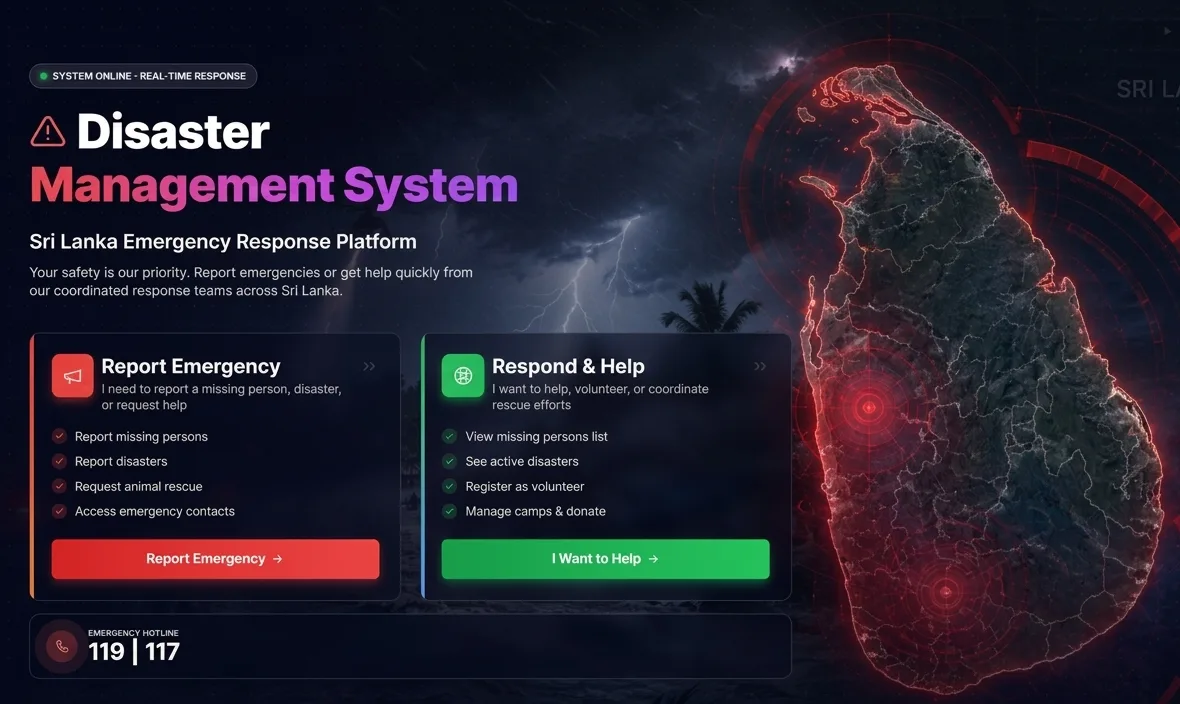
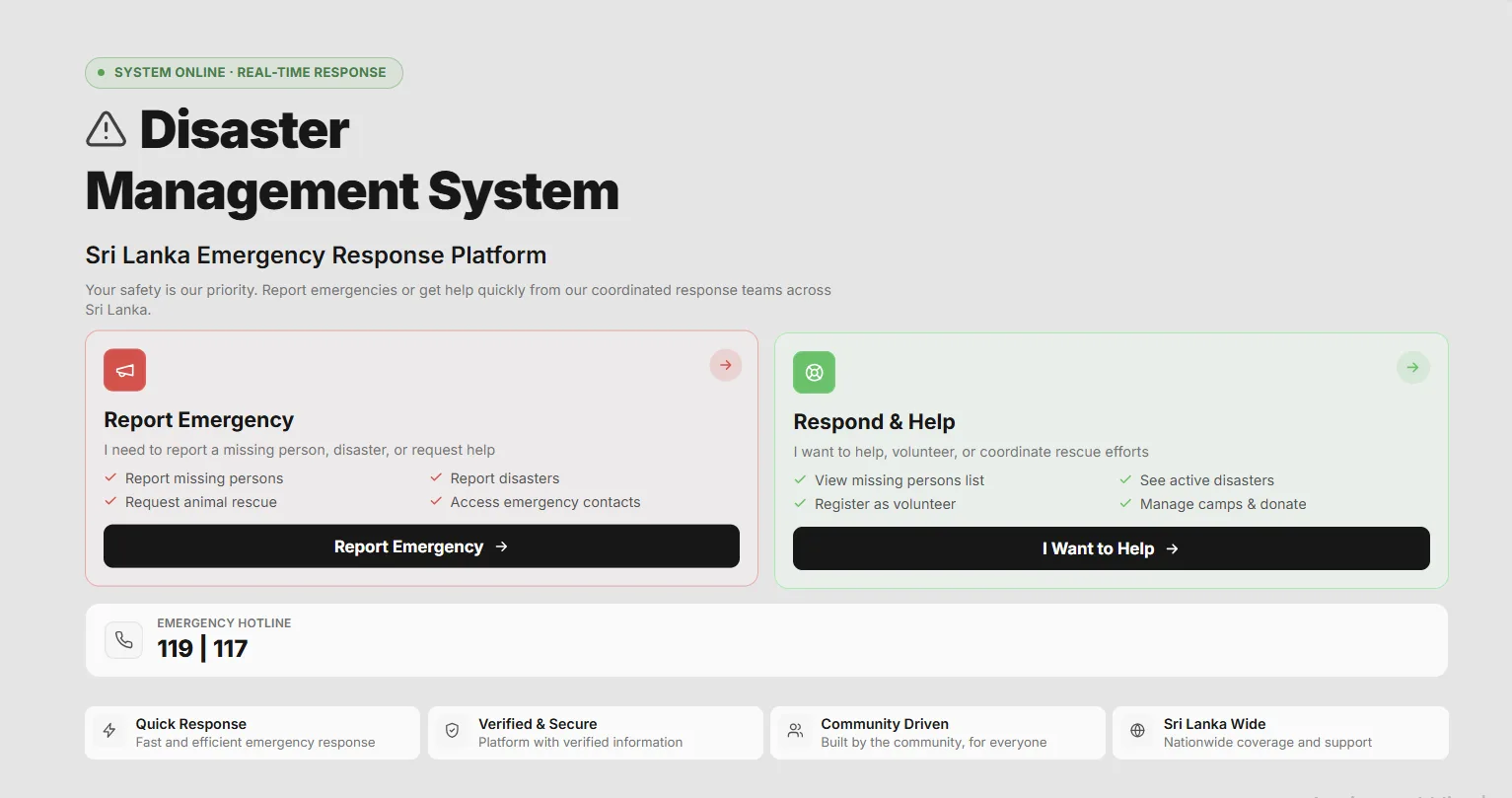
Disaster Management System
AI-assisted emergency response platform combining multichannel reporting, offline support, deterministic triage, and optimized resource coordination with human oversight.
- React
- SMS APIs
- Supabase
- Gemini API
Overview
-
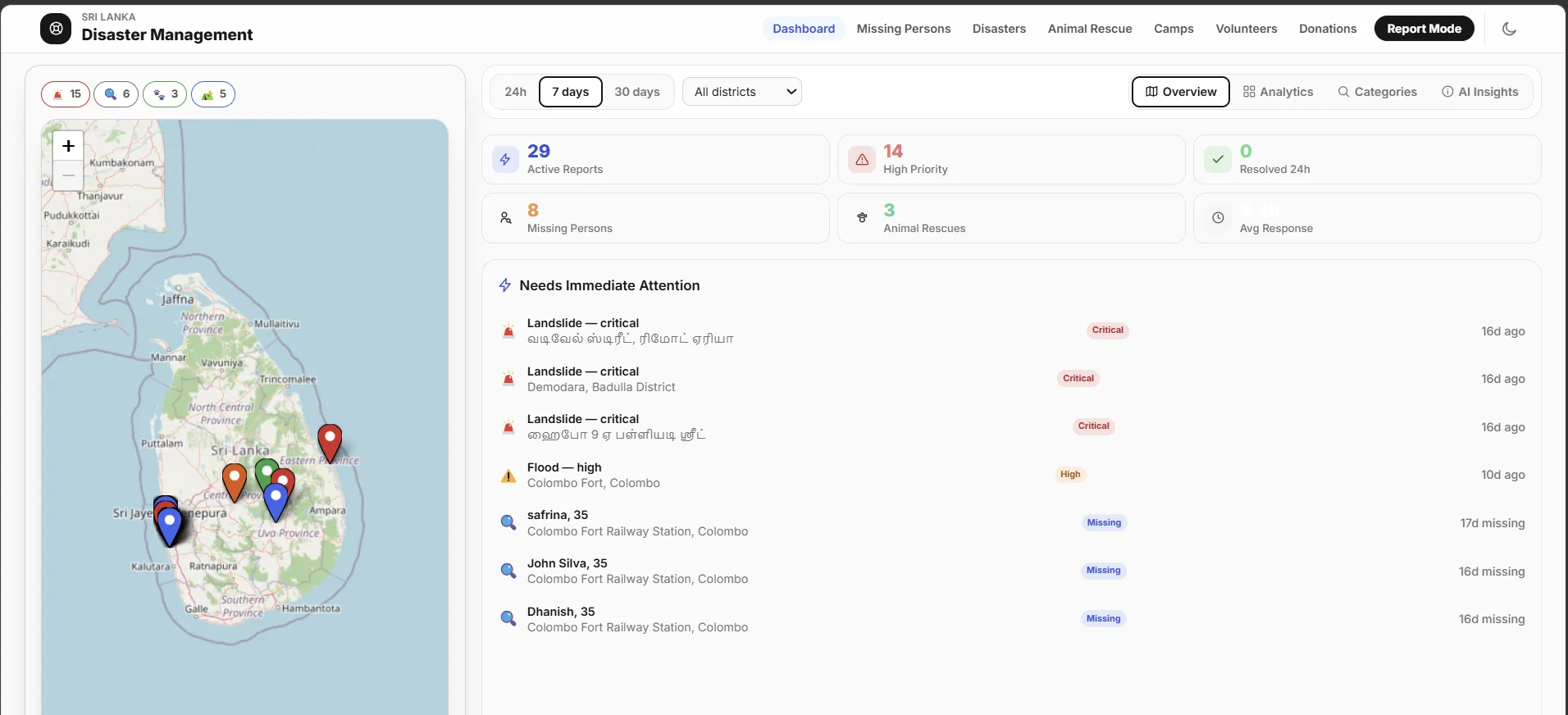
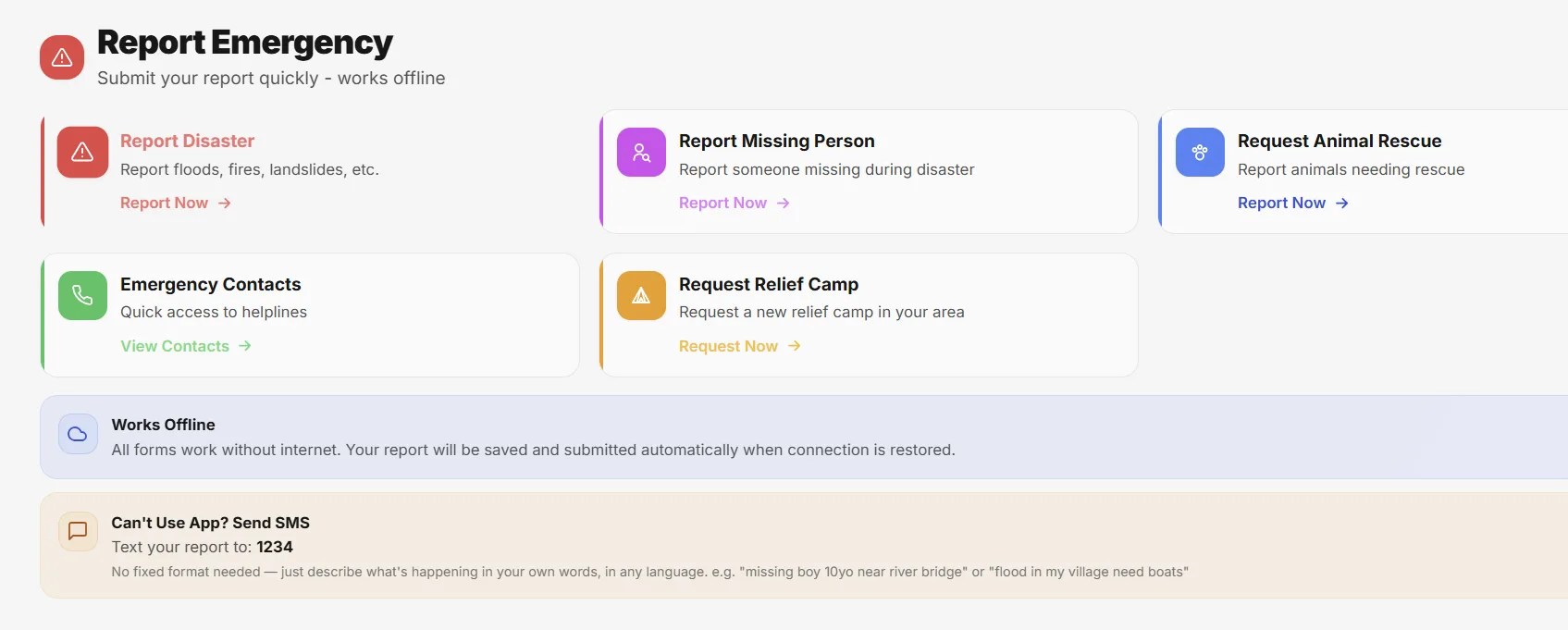
Built a multi-channel emergency reporting pipeline that unifies web forms, multilingual SMS, and phone-call recordings into the same structured disaster, missing-person, and animal-rescue workflow using shared AI extraction and geocoding logic.
-
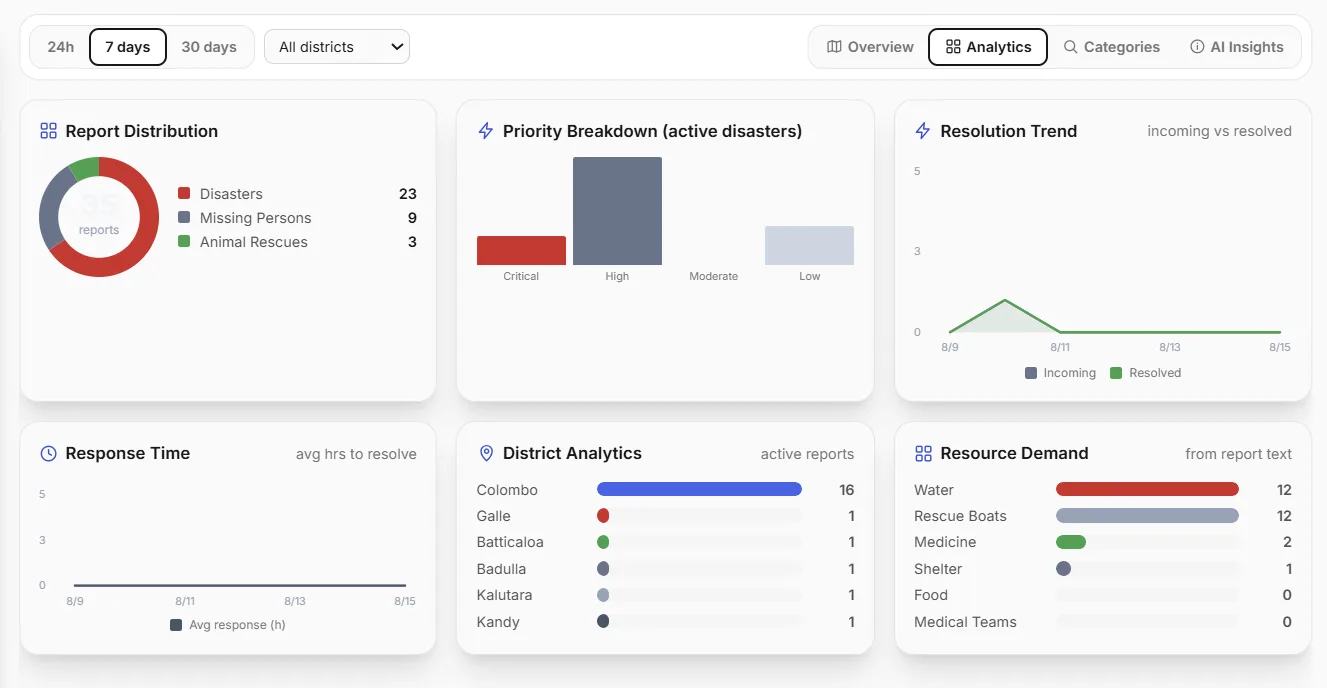
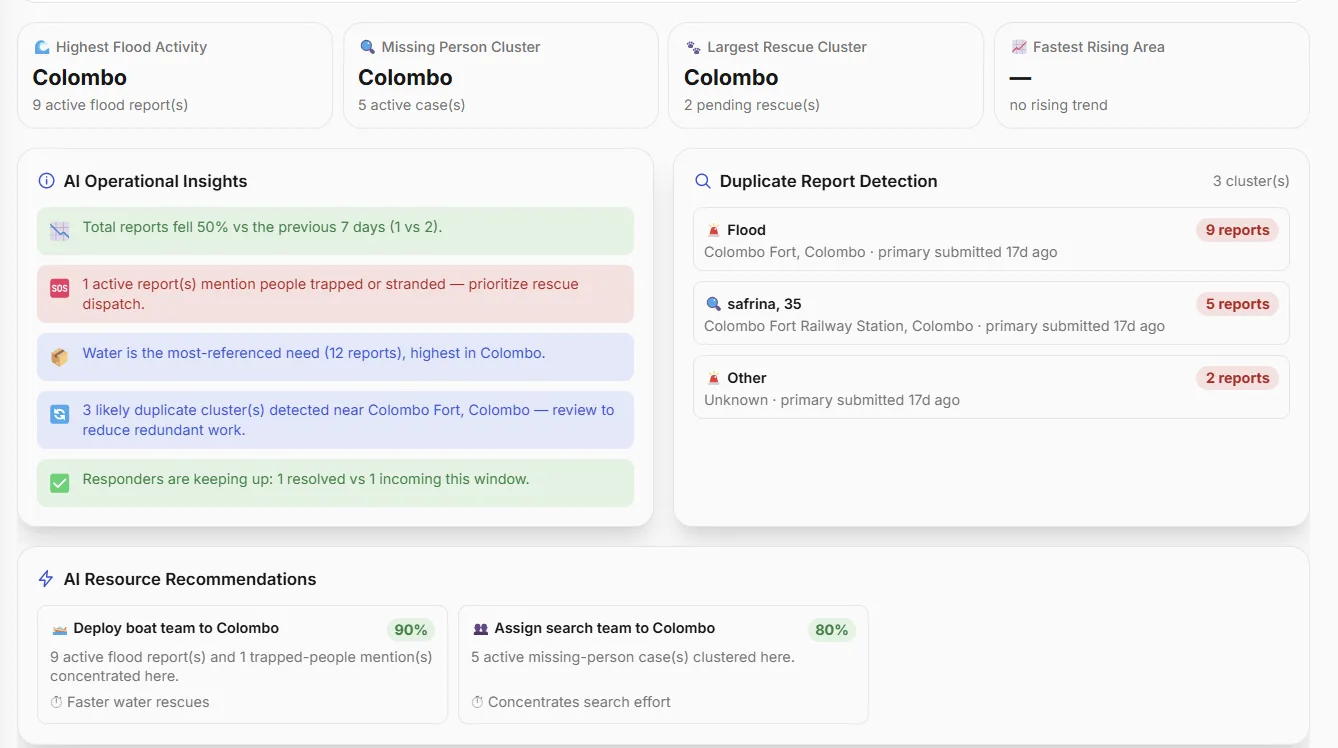
Designed a decision-support architecture where Situation Awareness, Incident Prioritization, Resource Allocation, Route Optimization, and Volunteer Assignment agents operate sequentially over PostgreSQL as a shared blackboard, with both scheduled and admin-triggered execution.
-
Engineered deterministic disaster triage instead of relying on black-box LLM decisions, computing risk and priority from severity, casualties, affected population, incident aging, report velocity, and nearby camp-capacity pressure while preserving the contributing factors for auditability.
-
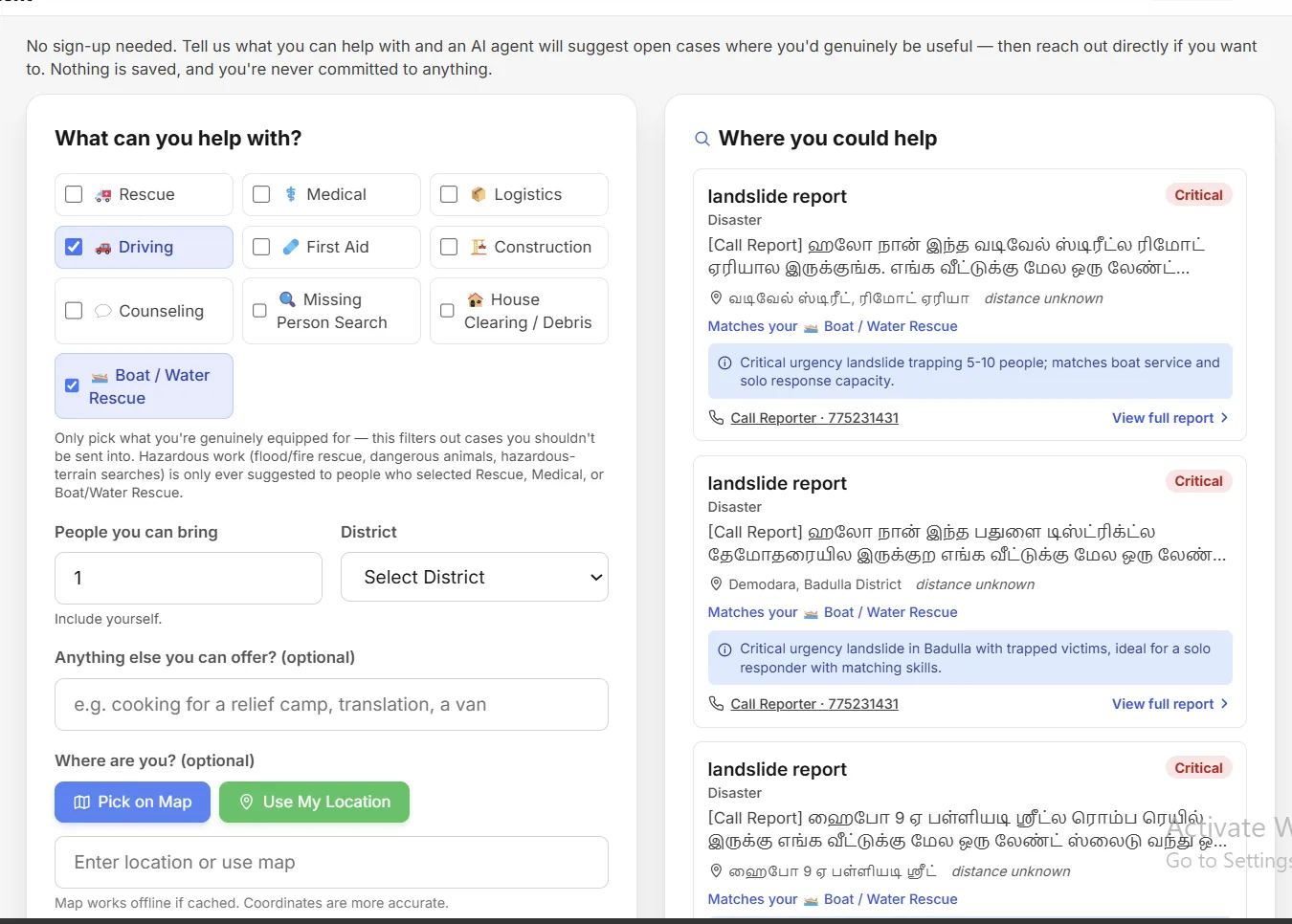
Applied Operations Research to emergency resource coordination, using Vogel’s Approximation Method for distance-aware supply-to-demand allocation and the Hungarian algorithm for optimized volunteer-task matching, combined with road-routing data for deployment planning.
-
Implemented offline-first emergency reporting with IndexedDB-backed submission queues, retry tracking, and connectivity-aware synchronization so reports can be captured during network outages and automatically submitted when connectivity returns.
-
Added safety-focused human-in-the-loop controls for sensitive operations: resource movements remain approval-based, while missing-person closure messages are deterministically screened for ransom/payment requests, financial credentials, coercion, and attempts to move vulnerable users to private communication channels.
-
Separated AI understanding from operational authority: Gemini handles tasks such as multilingual natural-language extraction and narrative generation, while safety-critical prioritization, allocation, matching, and routing remain governed by inspectable algorithms and administrator oversight.
Gallery
Interested in something similar?
I'm open to new projects and collaborations — let's build something great together.
Get in touch